A World At War Just Like It Was Yesterday: HAWSER – A Review

BOOK | FICTION | LITERARY
HAWSER by J Hardy Carroll
RATING: ★ ★ ★ ★

To one who considers some of his favorite literary works to be those about World War II – SLAUGHTERHOUSE FIVE and CATCH 22 being the obvious ones – the war seems to be very present for me, when in fact it is now eighty years in our past. With it now so far removed from us, and with the space filled in by so many countless other wars, it really is quite an accomplishment that author J Hardy Carroll was able to bring the period back to us in such a vivid and entertaining way.

HAWSER, our selection for Volume 3 of the Indie Author Book Selection & Review (IABS&R), is a finely weaved, fascinating tale of Hawser (don’t bother asking him his real name) as he recounts his time as a B-17 bombardier during the Allies’s bombing campaign against the Germans.

We meet Hawser in a prisoner of war camp and it is from there he recounts for us all that has happened to him in the war before that point. We learn how he washed out as a pilot to become a bombardier, how he had to abandon his unit because of a murder, how he was abandoned as a child, how he met his arch nemesis, how he became trained in subversive warfare, how he became an expert bombardier, how he became burnt out and disillusioned by the war, and finally, how he tragically became a Nazi prisoner. From there we pick things back up from the present time in the story and we go along with him until the book’s conclusion.

Within that very rough sketch that I just laid out of the novel, there are so many – too many some may argue – different plot twists and sub plots filled with suspense and murder and love and passion and discovery and deceit along the way that several times throughout the course of my reading the book I had to stop to marvel at Carroll’s ability to manage it all so seamlessly and with such intrigue, all the while bringing out some of the larger and more poignant lessons learned from the war: mainly of the incalculable death and psychological and material devastation that the war wrought across the entire globe, as well as teaching us – or reminding us – that war isn’t always honorable and that not all people go to war to be heroes…some go to war simply because they want to kill.

And I was equally impressed with all the military and war jargon with which Carroll was able to flavor the story. It it his description of the B-17s and all their guns and ammunition and flight formations, and his knowledge of England during the war and its pastoral settings and its pubs and its quirky dialects that truly bring the story to life. Now I don’t know how much research Carroll had to do – my guess is a lot – and I don’t know how much of the detail he writes in the story is accurate – my guess is all of it – but I don’t really care. I don’t care because it all seems so real and so accurate that it significantly enhanced the story’s ability to pull me into that zen-like space of blissful verisimilitude.

In the end, the only flaws to be found with the book are in its ambition and achievement. At times the sub plots pull back the tempo of the story and I never really felt that there was that one thing, that one element of the story that had enough heft to bring an immediacy, an urgency of discovery, from the beginning to the end of the tale. But I see that more as a good problem for an Indie Author to have, as it is always better to have too much material to work with than not enough.

So I say congratulations and thank you to J Hardy Carroll for writing such a powerful story that both entertains and reminds us just how much effort and expense throughout history we silly humans have invested in our seemingly never ending quest to kill and conquer each other.
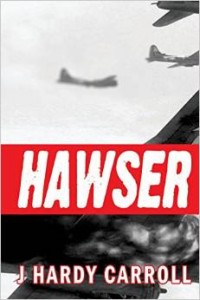

Hawser

jhardycarroll.com


~~~~

RATING SYSTEM:
★ = UNREADABLE
★ ★ = POOR READ
★ ★ ★ = AVERAGE READ
★ ★ ★ ★ = OUTSTANDING READ
★ ★ ★ ★ ★ = EXCEPTIONAL READ


A Poetic Response to our Occult Relationship with the Vegetable as found in “Nature” by Ralph Waldo Emerson

The greatest delight which the fields and woods minister, is the suggestion of an occult relation between man and the vegetable. I am not alone and unacknowledged. They nod to me, and I to them. The waving of the boughs in the storm, is new to me and old. It takes me by surprise, and yet is not unknown. Its effect is like that of a higher thought or a better emotion coming over me, when I deemed I was thinking justly or doing right. – Ralph Waldo Emerson

Give me the Forest

give me the forest
the whispers
the wind

where only the keening call of the morrow
dare break the sacred calm of the sylvan now

the ritual of the soaring hum

give me the forest
the neglected
the free

where there are no rules
but the rooting scrawls of the cloven beast
unearthing pagan creeds
blasphemous guides to the dark
to the place where all the fears are found

all the magic

give me the forest
the sanctified
the holy

where the haunted howls of midnight
call to worship
to prayer
all the pious and profane

all the naked unbelievers who mock the baptismal of the moon

give me the forest
the ancient
the eternal

where the tattered persona is stripped away
ripped away and hung from the treetops
desperate semaphore signals for the dire

the damned

where the anima dances on fresh laid graves
sodden with tears of the holy

the helpless

A Meditation on an Introduction’s Second Paragraph as found in “Nature” by Ralph Waldo Emerson

Having moved slow and steady through two readings of Nature, with nightly accompaniments of Librivox audio readings that would lull me away to sleep with visions of all the vast universal wonderments dancing in my head, it is now time to sift through my sporadic notes and swirling thoughts to try to make use of what I have come across, as I look to somehow apply to my life all that which Emerson teaches with his complexly simple essays as found in Nature.

However, as I consider such intellectual derring-do, I find myself drawn back to one of the first opportunities for learning the work provides me; one found in a most bold and faith-requiring passage from the introduction:

Undoubtedly we have no questions to ask which are unanswerable. We must trust the perfection of the creation so far as to believe that whatever curiosity the order of things has awakened in our minds, the order of things can satisfy.

What a wonder of a statement – Undoubtedly we have no questions to ask which are unanswerable.

What a brave, perhaps reckless even, proclamation – We must trust the perfection of creation…

Must we?

Do you believe that?

Undoubtedly – without any doubt?

Do I believe that?

As wonderful and bold as this passage may be, alas can it possibly be true?

Can it be possible that the order of things can satisfy completely my curiosity? Can this perfection answer all my questions, from those of the most simple and mundane to those of the most metaphysically profound?

And even if it can be possible, will it?

Only time will tell, I suppose.

Until then, for answers to all my seemingly unanswerable questions, I rely upon the only thing the perfection of creation presently allows me…

And that is my less than perfect Faith.

Speaking of Weird… Selection

So, if there were a “Literary Scale of Literary Weirdness,” how would today’s responses to today’s controversial prompt measure against it?

Well, to answer that question, I suppose we first need a “Literary Scale of Literary Weirdness” for which to measure them against.

Well, since I’m the one “with the ball,” so to speak in military jargon, I guess it’s up to me to set the bar, so to speak in Field & Track jargon.

Well, using American authors as the points on the scale, I would say that the highest level of weird, a perfect 10 in weirdness, would be Faulkner’s The Sound and the Fury. An average level of weird, a midland 5 in weirdness, would be Vonnegut’s Slaughterhouse Five. And the lowest level of weird, an absence of weird at 0, would be Hemingway’s For Whom The Bell Tolls.

Well Yes, I realize that my scale is packed full with extremely white and even more extremely male authors. Could have something to do with my socialization process as a child. Not sure. However, please feel free to set your Literary Weird Scale based upon your own childhood socialization process. I won’t mind. I promise.

Well, I better not promise… I offend easily.

Anyway, now that we have a “Literary Scale of Literary Weirdness” for which to assess the weirdness level of our two submissions in response to today’s controversial prompt, I make the bold assessment that they both fall somewhere around the level of a 1 on the scale, which just may be something along the line of a Of Mice and Men (yes, I know…another white author dude) or a 2, which just may be a Kingsblood Royal (ditto on the white author dudeness…but at least Lewis was attempting to bring to literary light our white dude racist ways. Which, in and of itself, is pretty weird considering when the novel was written.).

Well, bottom line, then… based upon my assessment, utilizing our brand new “Literary Scale of Literary Weirdness,” today’s responses to our controversial prompt are highly weird depleted.

However, if we were to turn our “Literary Scale of Literary Weirdness” into a “Literary Scale of Literary Awesomeness” then I assess our two responses to today’s controversial prompt would be near off the high end of the scale.

That’s right… While the two submissions are hardly weird, they both are highly awesome.

Well So, seeing that trying to pick one submission over the other based upon both their literary weirdness and awesomeness is a wash, I guess we’ll have to come up with some other way to delineate between the two.

We could go by word count…

But that would hardly be fair seeing they are two distinct literary forms. And while, being rather tall, I tend to fall into the “bigger is better” camp; when it comes to the arts I fall more into the “less is more” camp. So, word count is a non-starter…

We could go with a “correctness” approach. Meaning, whichever submission is more correct than the other…in terms of grammar and spelling that is…wins.

Hmm… Yeah, let’s do that.

Well lookie here… Seems author J Hardy Carroll has already confessed to a “couple of typos.” How ’bout that? Kinda makes things easy for me, seeing that without the confession I just may have overlooked the typos, regarding them not as errors but instead as just being part of the author’s intended poetically licensed weird.

And I’m finding neither a confession of errors nor any non-confessed errors in author karen rawson’s submission.

Well, I guess that’s that then.

While we have a tie in a lack of literary weirdness and an abundance of literary awesomeness, we do have separation between the two in literary correctness.

As a result of this separation, however slight, it is my pleasure to present to you today’s selection for our controversial Weird Wednesday prompt…


A GHOSTLY CAPOTE CAME CALLING
by karen rawson

A ghostly Capote came calling
Said you saw what they called Summer Crossing
Jerry’s letters went viral
Your Watchman will spiral
The trick is to burn your own writing.

karcherry.wordpress.com


Thank you very much to both J Hardy and karen. And while I may have made a bit of a mockery of my selection process, I am not joking one bit when I say that they are both extremely high on literary awesomeness scale. JHC’s story had me right there in the room with our three angelic authors. The dialogue is era-appropriate and the tone pitch perfect. I thoroughly enjoyed reading it…several times…typos and all (plus I appreciate the insight of what I might expect if I am to review JHC’s very compelling-looking novel (see sidebar). All the while, karen’s poem has everything that could possibly be packed into such wonderful poetic artistry with such an economy of words, all the while hitting the proverbial nail on the head with its symbolism and allusion. And, as the great Kafka himself requested in vain that all his papers be burned upon his death, I am sure he would be nodding his head in enthusiastic agreement of the poems moral of a message. Extremely well done to both.

This would make for great fiction…

Global food poisoning? Yes, We’re maxing out. Forget Peak Oil. We’re maxing-out on Peak Food. Billions go hungry. We’re poisoning our future, That’s why Cargill, America’s largest private food company, is warning us: about water, seeds, fertilizers, diseases, pesticides, droughts. You name it. Everything impacts the food supply. Wake up America, it’s worse than you think.


We’re slowly poisoning America’s food supply, poisoning the whole world’s food supply. Fortunately Cargill’s thinking ahead. But politicians are dragging their feet. They’re trapped in denial, protecting Big Oil donors, afraid of losing their job security; their inaction is killing, starving, poisoning people, while hiding behind junk-science.MarketWatch

He says that over the next 50 years, if nothing is done, crop yields in many states will most likely fall, the costs of cooling chicken farms will rise and floods will more frequently swamp the railroads that transport food in the United States. He wants American agribusiness to be ready.New York Times

Among the future trends that will impact our national security is climate change. Rising global temperatures, changing precipitation patterns, climbing sea levels, and more extreme weather events will intensify the challenges of global instability, hunger, poverty, and conflict. They will likely lead to food and water shortages, pandemic disease, disputes over refugees and resources, and destruction by natural disasters in regions across the globe. In our defense strategy, we refer to climate change as a “threat multiplier” because it has the potential to exacerbate many of the challenges we are dealing with today – from infectious disease to terrorism. We are already beginning to see some of these impacts.Pentagon

If it wasn’t already our reality…

And which is why I believe this and this.


A Meditation on an Introduction’s Opening Passage as found in “Nature” by Ralph Waldo Emerson

Our age is retrospective. It builds the sepulchres of the fathers. It writes biographies, histories, and criticism. The foregoing generations beheld God and nature face to face; we, through their eyes. Why should not we also enjoy an original relation to the universe? Why should not we have a poetry and philosophy of insight and not of tradition, and a religion by revelation to us, and not the history of theirs?

Here we find Ralph Waldo Emerson, in the opening passage of his introduction to his seminal essay “Nature,” bemoaning the distance he and his generation are from anything Original and True as compared to preceding generations. As he sees it, only through the firsthand experiences and the tales of our forefathers and foremothers have we been able to learn our life’s lessons and traditions. The gleaming highest highs our civilizations are able to reach are only because of the solid foundations built from and with Nature’s sacred mud by the caring and calloused hands of those to whom have gone before us and who now uplift us still.

If the great Emerson, a transcendental man, perhaps the Transcendental Man as he was in possession of a most extraordinary ability to focus and perceive that which the eye of most mortals miss, is shocked by such a revelation, then it seems to this less-than-transcendental and exceedingly mortal man just how far we find our present selves from those God beholding foregoing generations would bring about the death of fright to such a perceptive and feeling man as he.

And it is not just a distance in generational time I am referring to, but also, mostly, a distance in understanding, as perhaps the same could be said of Emerson’s meaning; though as far as he felt his generation was from an understanding of the Original and True, just how much farther away from understanding we of the present are is too hard for me to imagine.

Just what does our generation know of Nature? of God? of the Universe? Just how many more countless sepulchres have we built and how many more countless biographies have we written? Surely we know greatly of nature and of god and of the universe through the words and misdeeds of our spawning and splintering sects and religious disorders, and through the kaleidoscopic lens and the equations of the material, the physical, carried out to the farthest nth of a degree, accessible to only but a few of our most scientific of brains. Yea, ours is but a weak and plastic generation with hardly one of us finding even a germ under the nail let alone a fleck of sacred earthen mud, so far removed from Nature and Her Elements are we.

Like the everlasting trees
Of the most symbolic

Our ancients bare green before us
Full in their lustrous branches
Roots firmed in their foundation
While with the passing breeze
Our limbs naked and thin
We waive

Lo! but look at me. Look at me, me with my naked, thin limbs waiving away my right of birth to ancient spirits more alive long dead than I whose blood still courses hot will every be. I whose blood still courses hot but whose heart has grown cold and without passion for the Original, the True. I lie content each night having yet let another day slip away without once baring my feet and stepping into the grass; without once feeling the raw moonglow on my rusty skin.

But it wasn’t always so. I wasn’t always so distant from the Original and the True. And neither were you, for we were all born of and from the Original and of the True. It is who, in essence, I am and who you are.

We just forgot, that’s all.

We just allowed each passing day to take us farther and farther from who we were born to be.

So much time has
passed since then,
since I last felt raw
moonglow on
my rusty skin,
that I have forgotten
how the breath of night
can upturn a sallow face.

Long ago,
when I could still remember
how to pause,
and how to listen,
and how to breathe,
for more reasons
than just to breathe,
I knew fields
and wood,
and calico aster;
I knew how to kneel,
and how to observe,
and how to bring myself to quiet.

And I knew,
without knowing,
that if I lay
on my back
beneath the reeds
and remained hushed,
as night clouds
floated by,
shadowed and silent,
that my Self
would simply fall
away.

Step Into the Grass, an excerpt
from Poems from the River

As romping youth we did not have to be told how to meditate, how to pray. We just knew. We had no need for such technical terms as spirituality or epiphany or satori, for it was in our unknowing that we were able to truly know them. And now that we know them, we know nothing.

I suppose the question is, then, can we return to our essence? Can we, in our knowledge and understanding, return to the bliss of ignorance, to the wisdom of youth, so that we can come back again, if even just a little closer, to the Original and True.

Are we able to do that, knowing what we know?

Tonight
I’ll bare my feet
and step old and aching
into the caliginous balm
of the cool redemptive night.

A Meditation on a Title and an Introductory Poem as found in “Nature” by Ralph Waldo Emerson

A subtle chain of countless rings
The next unto the farthest brings;
The eye reads omens where it goes;
And speaks all languages of the rose;
And, striving to be man, the worm
Mounts through all the spires of form
Ralph Waldo Emerson
Ralph Waldo Emerson

Too often I’ll show little regard to introductions and read through them with hardly reading them at all, my eyes skimming dismissively over the words in an effort to get to “the true essence” of the work. However, as I have resolved to not just read, but to read deeply the work of Ralph Waldo Emerson, I have to remember, then, that care needs to be given to each of the words that Emerson had specifically chosen to pen, as he had entrusted each chosen word to convey its part of a broader message that he had, himself, intended to convey. So it is with care and attention that I proceed.

~~~~

Other than the title, the above poem is our first encounter with the essay “Nature,” the first piece presented in The Complete Essays and Other Writings of Ralph Waldo Emerson; and, consequently, the first commitment to that which I have resolved myself. But before considering the poem, we mustn’t overlook the essay’s title; for, from it, we can focus more clearly on the meaning of the poem specifically, as well as the body of work writ large.

Hardly can there be a title broader in meaning than “Nature,” for the word encompasses so much: the essence of the Natural Environment – all within the world and all the worlds within the universe; the essence of the Human Environment – all that which the mind thinks and the body feels; as well as the Environment of the Animal, which may or may not include humans, depending on one’s belief. Though broad and ambiguous, it is full of meaning, as any title should be, as it prepares our minds for all the largesse and grandeur that both Nature, Herself, and the mind and poetic ambition of Emerson can account for. The title, therefore, helps us greatly in our discovery, in that it prepares us to read both the poem and the essay with a universal and open mind, where metaphors and allusions are to be found with meaning, and meaning more.

The poem, itself an introduction to the introduction, is both untitled and unattributed. Often we find authors will select poems and quotes from others, mostly those recognized by history as being of the elite authorial class, as a preface or opening to his or her work. These introductions in brief are generally an attempt to provide a broad look into the author’s mind and, hopefully, to the direction that his or her writing will be taking us. However, as it is untitled, and as Emerson’s reputation precedes his work, for he, himself, is regarded by many to be an elite author, it is easy enough to assume that the poem is an original piece by him. Still, the poem remains untitled, which only means that we will have to rely more heavily on its content, looking closely at each sentence and the words within for us to gain of it our fullest appreciation. So with the poem, let us begin.

A subtle chain of countless rings / The next unto the farthest brings;

Right away, the poem’s “subtle chain” announces that in the essay, as in Nature, we should expect revelations of mysteries linked yet boundless; simple in form, perhaps, yet complex and profound in meaning. For the “subtle” or simple chain, a common yet powerful metaphorical device, enlightens us with its “countless rings” – its circles of life – by alluding to the eternal fact that Nature in all her majesty enjoins all together in common constituency within her universal realm, from the most diminutive to the most grand, “unto the farthest brings” – to the infinite’s endless end.

The eye reads omens where it goes;

Sad would be the soul who hasn’t walked even the shortest way into the wood or out into the empty, expansive field, to where everything slows down to quiet and allows one to hear Nature’s call, be it through the creaking sway of the trees or the hum of the wind upon the grass. For once where She Her presence reveals, so, too, will Her omens, signs signalling the nature of our Collective and Universal Soul through the mundane: acorns scattered on the wooded floor signals life’s endless cycle of birth and death, as the mist of the passing clouds signals the transformative and transient nature of life itself.

And speaks all languages of the rose;

While not all of us speak the same language, we all can look at the rose and equally understand its beauty. And, regardless of all the many different ways we may express it in words, we all have that same feeling of awe and humility as we arrive at that deep and soulful understanding of just how small our presence is when looking up towards that grand vastness above filled with its countless twinkling diamonds of light.

And, striving to be man, the worm / Mounts through all the spires of form

The line suggests that the worm in its striving is emulating our behavior; however, I read it as further suggesting that from the worm’s behavior we have learned to strive, from the worm we have evolved, and as the worm forever works through all forms of nature – be it the soil, the wood, the apple – to realize its true nature, we, too, forever work “through all spires of form” – be they the physical or metaphysical – continuous “unto the farthest brings,” as do links of an endless “subtle chain,” in a most noble and enduring of effort to realize our own true nature.

~~~~

With this meditation on a one-word title and one-sentence poem we discover that, while both may appear simple in form, both hold complex and profound messages that are, we must assume, a herald’s call as to the further complexities and profundities that await us.


  • Sorrow is coming soon! Help support its success by requesting a free prepublication copy and posting your review of it upon its release. Send an email to hank@kurtbrindley.com to request your copy.
  • Subscribe to Kurt’s aperiodic newsletter and receive a free copy of his short story collection LEAVE: And Other Stories Short and Shorter

I Am Resolved

Kenzaburō Ōe
Kenzaburō Ōe

I am not one who dwells on the past, or, at least I try not to; for, unless one is fondly recalling, perhaps in a prayerful moment of divine gratitude, all the wonders and blessings the Begetter On High has begotten one, it is mostly a futile and potentially harmful self-flagellating exercise of ego worship in the negative. However, as hard as I try to stay securely in the now and out of the then, I still do find myself unconsciously lost back yonder from time to time reflecting on my life, and I am highly skeptical of anyone who righteously says in a wispy Eckhart Tolle wannabe voice while meditation bells softly chime in the background that they never do. (Just as I am even more highly skeptical of anyone who says they have complete and whole body faith in anything, be it their favorite sports figure or favorite God figure — we all have our doubts. But I digress…) So, if I were to be in the dwelling-in-my-past kind of mood, and if, while there, I were to dwell down even deeper into that dark danger zone of “what ifs”, I just might wonder what my life would have been like if I were to have had the strength and integrity to commit it to such intellectual rigor and deep thinking as Kenzaburō Ōe has had and has done throughout his highly acclaimed and respected life. Just where would my brain and I be right now? Unfortunately, I can only imagine.

When I was in my twenties, my mentor Kazuo Watanabe told me that because I was not going to be a teacher or a professor of literature, I would need to study by myself. I have two cycles: a five-year rotation, which centers on a specific writer or thinker; and a three-year rotation on a particular theme. I have been doing that since I was twenty-five. I have had more than a dozen of the three-year periods. When I am working on a single theme, I often spend from morning to evening reading. I read everything written by that writer and all of the scholarship on that writer’s work. ~ Kenzaburo Oe, Paris Review

I have read much of Ōe’s work and I believe it is some of the finest writing written, deserving all the acclaim and respect it has earned him, including the Akutagawa Prize, Japan’s highest literary honor, and, of course, the Nobel Prize for Literature; however, it is his integrity and commitment to that which he holds dear that I most admire about him. He is an ardent supporter of human rights and proponent for peace, mostly through his lifelong activism for the global elimination of nuclear weapons. But even more than his activism, I admire him mostly for his love and care and complete devotion to his mentally disabled and musically savant adult son Hikari, of whom most of Ōe’s inspiration has been drawn from and much of his writing has been about.

So, what is one to do when one admires someone as much as I admire the great Kenzaburō Ōe? Emulate the behavior of the one whom is admired, of course.

And that is what I resolve to do. To emulate Ōe’s behavior of surveying broadly and digging deeply into both an author’s work and life.

I have decided to commence this resolute commitment of mine with one of the greatest intellects my country, the United States, has begotten: Ralph Waldo Emerson. While familiar with the man and his work on a surface level — an essay here, a poem there, not to mention all the quotes of his that travel and transcend all the ethernets throughout the internet — I have yet to fully discover and understand the man and his work. To begin this discovery and understanding process, I will read first his Complete Essays and Other Writings, followed by (or perhaps even in conjunction with) Oliver Wendell Holmes’s work, Ralph Waldo Emerson: Biography.

Now, I have no intention of committing to, or even attempting, Ōe’s herculean three-year / five-year schedule; I do, however, intend to read as much of Emerson’s writing, as well as writing about him and his writing, that my way less than Ōe-ian brain can hold. And, I also intend to document this Emersonian commitment of mine here, through the posting of essays and other reflections on my readings. What, or whom, awaits me after I fulfill my Emerson commitment, I am not yet certain. I will let the literature decide.

Wish me well please, for I may need your encouragement from time to time.

But, who knows, maybe I won’t need it so much, as I am quite excited about this initiative; for just think of the opportunity I am providing myself – henceforth, a lifetime committed to the full development of my own intellect. Who can predict what joys and benefits I will reap from this effort? Because in twenty-five years when I am close to the age Ōe is now, I don’t want to be able to just imagine where my brain and I will be after such an enduring and fulfilling effort, I want both my brain and me to actually be there. I want to be able to, perhaps in a prayerful moment of divine gratitude, reflect on the twenty-five years gone past, and give thanks for all the additional wonders and blessings that the Begetter On High has begotten me because I was able to have had, if not fully, then at least partially, lived such an admirable life of integrity and commitment as had the great Ōe himself.


I’d like to introduce you to my little friends…

The boys at play
Brothers at play

Friends and new family members, that is…

While we have quite the cat already – Jack Kerouac – whom I introduced some time ago and can be found as part of Photography page’s gallery collection, I am and always have been a dog man…besides, Kero-chan will have nothing to do with me as he is wholly devoted to the lovely and loving wife, and who can blame him.

But that is fine by me. As a true dog man I can remember clearly all my dog buddies who were there for me all throughout my life. My first dog as a child was an old hound dog named Mickey. I remember with fondness how his tail would always slap at me whenever he was happy. And while all my dogs were great friends to me, my bestest of best friend of all was our last dog Shikibu, a tiny little snowball of Maltese magic.

Shikibu
Murasaki Shikibu
There are several reasons I am still here on earth after all the leukemia and lung disease as a result of the bone marrow transplant BS. First and foremost is that Universal Power Source of Infinite and Abiding Love we often refer to as God answering all the many, many prayers from all who love me in the form of my lovely and loving wife’s angelic grace and care, and a close second was Shikibu’s love and devotion to me throughout all that BS. Rarely could I leave my chair throughout all that BS, and rarely was Shikibu not by my side throughout all the BS…tucked away snugly, seemingly impossibly so sometimes, between my left hip and the arm of my recliner. Although eternally a puppy in looks and demeanor, she was an elderly lady when the cancer bug got me in 2009, and she was there for me through the worst of it. She died in 2011, not long after we all pretty much realized that I was going to be hanging around a little bit longer after all. She had many serious illnesses herself toward the end but it is my firm belief she held on long enough to know that I was going to be okay. It took me a long time to get over her passing; though I’m not sure that I really am…or ever will be. But recently I had finally reached a point where I was in need of more canine companion.

We knew we wanted a rescue puppy (it had to be a healthy puppy as I have enough issues of my own for my lovely and loving wife to attend to) and we knew we were going to be patient in the process. I did not realize, though, just how patient we’d have to be. I did most of my puppy searching through www.petfinder.com – it’s a very helpful place as it allows targeted search options. Still, I had no idea there are so many dogs in need out there. It took a lot of time. Always getting close, but never getting the cigar, so to speak. We’d find a pup we all could agree only to find that it was either too far away or that someone had just adopted it or any other multitudinous hurdles of a reason. It started to become tedious so we decided that we were going to wait until springtime to continue the search. That way we wouldn’t have to potty train a puppy in the snow. But a couple of days ago I just fired up the link on a whim and right away I came upon “Stella’s Boys” and that was pretty much all she wrote. We found exactly the pup we were looking for…the mostest cutest Plott Hound mix puppies you’ve ever seen

I wanted another hound dog, in honor of Mickey. One son wanted a Retriever for their loyalty and playfulness. And the other son wanted a brindle coated dog because of their unique look and cool name: brindle ~ Brindley …get it? And the wife did not want a horse-sized dog. All these desires came together courtesy of the awesome folks at the Delaware Puppy and Pet Rescue, Inc. Remembering the other pups we lost out on because of delay, I quickly filled out the online Adoption Contract and waited hopefully for the call back, which came on Saturday in the form of an email from Dianne, a hero and angel of a foster mom to the puppies, and many others, saying that we had passed the background check – a call to the references I provided and our local Vet – and invited us to her home to meet with the boys.

Yesterday we made the beautiful two-hour drive to Landenberg, Pennsylvania. If we hadn’t been on such a mission, the wife and I could have easily spent the entire day taking pictures, as the countryside drive was so pleasantly pastoral. But we were on a mission and as soon as we got to Dianne’s home and I saw all the cute puppies, I knew we were coming home with more than one.

And we did. And now I once again have my much needed and appreciated canine companion…thankfully so.

While I can pretty much guarantee you won’t be seeing many more, if any more, pictures of Kero-chan here, I cannot make that same guarantee about the newest members to our family. And while she will always be my bestest of friend and I will forever miss her, I’m pretty sure Shikibu, up in doggy heaven with Mickey, Kipper, Colonel Kish, Juno, and Sebastian, is perfectly okay with that.

Now whether Kero-chan is okay with the invasion…well, that’s a different story.

Puppies at rest
Brothers at rest