
Writing
Writing is Sorrow…
Having had written is sublime.
#notetoself
#amwriting
Any Fans?
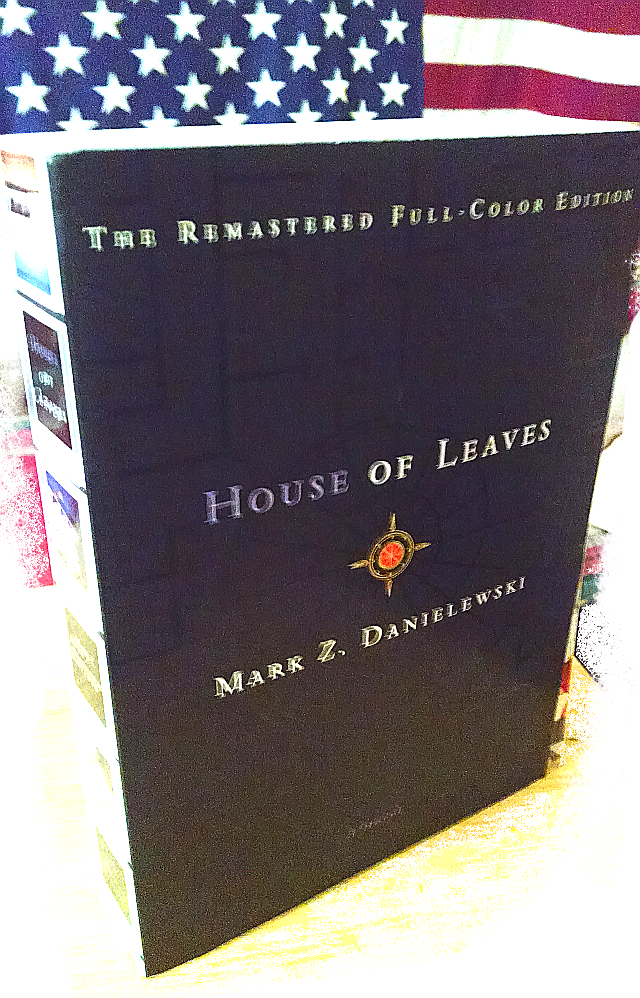
Been wanting to read this for a long time but now that I finally have it…
I find its presence rather… intimidating.
#prayforthetimidreaders
Why Write, Dammit?!

I’m not a very good writer, by which I don’t only mean it in regards to what I’ve written, but also and mostly to how I’ve written.
The act of writing pains me and I’ll pretty much do anything mostly legal I can to get myself out of it. I guess the best way to express how I feel about writing is: I don’t like having to write, but I truly love having had written.
But still, I don’t really know why I do feel the need to write except that there is some unidentified force and/or source beyond my reach and comprehension that obliges me to do so.
I GOT MY PROPAGANDA, I GOT REVISIONISM…
#amwriting
#androckin’
#nin
The book’s always better than the movie…
Right?
That’s the rule, right?
Books rule over movies.
Always.
Before I got involved with this whole short film thing, I always would get indignant after watching yet another failed movie adaptation of a book I liked. And I would always wonder to myself why in the heck could they never get it write/right.
Until on a whim I decided to try my hand at adapting my short story LEAVE into a screenplay.
Right away I realized that this was going to be no easy feat.
Introspection and contemplation that serve a short story or a novel so well is basically useless in a screenplay where just about everything must be represented as action and dialogue so it can be seen and heard by the audience.
Of course LEAVE as a short story is mostly introspection and contemplation by the protagonist so right off the bat the whole structure would have to change in order to be able to show his shift of character from beginning to end.
To do this, new scenes had to be invented and new characters had to be developed and within the first writing of the story of LEAVE as a screenplay, it was already hugely different from the story of LEAVE the short story. And that was only by my own efforts.
After I showed it to an actor friend for his feedback, from his guidance it went from 33 pages down to fifteen. And yes, to whittle it down that much there had to be a significant change in story and tempo.
But really, the biggest changes to the story didn’t occur until once the screenplay was accepted by a studio and a director was found and she got ahold of it… and then several of the lead actors got ahold of it…
Talk about feedback overload. It took much effort and persuasion to maintain it as a story I recognized.
And, while we are scheduled to begin filming in two months, we haven’t yet cast the lead actor so I can only wonder what changes still might occur to it.
But you know what… the story as it is now as a near fully developed screenplay is really not that far from what it is as a short story.
It is just different.
And much, much better in my opinion.
Still, I guarantee it if you read the short story and then see the film, you will be significantly surprised by the differences that there are between the two.
I just hope you are not significantly disappointed.
But I can pretty much guarantee that you won’t be because we have an awesome crew and the cast is going to be first rate and impressive.
And I can also guarantee that from now on whenever I watch a movie that has been poorly adapted from a book that I like I will certainly be less critical and more understanding of the differences between the two and the winding and somewhat weary course that had to be traveled to get the story to the screen.
Because now I know.
And now I have only one rule regarding movies and books.
Both of them do.
Rule, that is…


Have you heard about our private Facebook Writers & Readers Group?
This is how music is done…
Hey what’s up?!
We’re going to be promoting our first Reward Package on Friday. If you would like to help me help you then please consider donating to help me make a movie and I will help you promote your book or other project. Huh?
Yeah.
So… I’m not going to be posting much for the next few months so please submit your work to one of the Relating to Humans features so I can post it to the blog in stead of my rambles and blather.
Can ya dig?
Anyway, here is some music that will make your toes tap and ears wiggle.
I guarantee it.
Oh yeah…
Write What You Know, You Know…
They say, Write what you know…
And in response I say, Okay…
So when I began in earnest to write stuff for people to read way back in the early Nineties – what a great decade that was – about all I knew about life outside of my personal life which I didn’t and still don’t have the guts yet to truly explore, was all pretty much navy-related.
Hence, the stories I wrote at the time were all pretty much, well… navy-related.
And therein lies the primary challenge I have when it comes to convincing and conniving folks who look a lot like you to read my writing… and now, to support a film based upon my writing: that even though the stories may be navy-related, it doesn’t necessarily mean they are stories just about the navy.
Some of you, many of you, are probably new to this site so understandably there may be a few things about me that you just aren’t aware of:
Like, even though my undergraduate degree is in English – which probably explains my nerd obsession with arranging and amalgamating morphemes into new and creative and interesting ways for you to read stuff, my graduate degree is in a completely unrelated field (well, maybe it’s a little related) of Human Relations – which probably explains my obsession with trying to understand why it is you think and behave the crazy and unpredictable way you do.
To satisfy my morpheme amalgamating obsession, I began to write; to satisfy my relating-to-humans obsession, I took a few years off from my primary career field in the Intelligence Community (oxymoron, I know…) while in the navy, to become a certified Equal Opportunity Advisor, where I spent much of my time providing counseling and training in diversity management.
And it is this relating to humans-related stuff that I would like to think is what my stories, while even though they may be set in a navy-related world, are all really about…
Like, as explored in my novel The Sea Trials of an Unfortunate Sailor, how do our perceptions and stereotypes influence our decisions when confronted with situations like homophobia and harassment and abuse?


Or, as explored in the short story and soon to be short film LEAVE, what was the environment really like for that courageous female sailor who took that first assignment to a warship with an all-male crew?


While these stories are set on navy ships during the Nineties, it is my belief their underlying themes and messages are relevant even, and especially, today.
Just recently Congress has authorized women to serve in all combat-related duties, not just some of them like back in the Nineties.
Right now there are courageous, pioneering females all throughout the US military – and throughout society in general – who are opening doors that have previously always been closed to them, and setting off on a course that clears the way for many more courageous females to forever follow.
So, yeah, we writers have always been told to Write what you know…
Just as you readers have always been told to Never judge a book by its cover…
Especially mine.
While Hacking at a Log
I wonder…
What is more important to most readers of literature…
Just the words as they are written?
Or the why the words were written – the author’s motivation?
Or the how the words were written – the author’s background?
When reading a thesis that may influence one’s medical or legal decisions, knowing that the author has the requisite knowledge and training to write with such influencing authority – the why and how of the words – probably should be important.
However, when it comes to literature – does it really matter what schools the author attended, or how well-read an author is?
Or would most readers regard a work of literature by a less-than educated or less-than well-read author similar to someone hacking in mad rage at a log with an ax and when she comes to her senses she discovers that she had, in her blind passion, formed a beautiful wooden sculpture*?
Would she have created art?
Should she then be considered an artist?
I wonder…
*This is far from an original thought of mine but unfortunately I cannot find the original quote to give proper credit. If you know, please comment.
My Uncolorful* Character(s)
I don’t know about you, but as for me – unless it is absolutely critical to the movement of a story – I don’t need to always know every item in each room, or the style and brand of every shoe in the protagonist’s closet… and I especially do not need to know about the mole on the back of the least minor character’s left ear.

Now, the genius of authors such as Balzac, Dickens, and Twain cannot be denied by me; however, I often find their attention to detail excessive and rather tedious for my overly sensitive reading sensibilities.
Especially Balzac.
I know, I know… It’s me not them.
But I’m the kind of reader dude** who enjoys employing as much as possible of my own personal image making machine, aka, my imagination, along with my thought processing gyrator, against a story’s plot, or lack thereof; and when it comes to a character and his or her physical appearance and personality traits, I prefer for them, through the details found in the story’s showing, to slowly emerge within that enveloping zen-like midst of verisimilitude (that I hopefully find myself in) until he or she can be seen standing clearly before my mind’s unblinking eye, fully developed and fleshed out.
So it should come as no surprise then when I tell all you other reader dudes*** that I try to write my stories in the way that I prefer to read them: with limited and only absolutely necessary descriptive telling.

For example, you will find that the book description for The Sea Trials of an Unfortunate Sailor reads in part:
Written with a narrative starkness, it leaves us with only our own prejudices and stereotypes to draw from and forces us to make assumptions about character and identity, and, in the end, determine not just who did it but if it was even done at all.
Admittedly, this book was written intentionally with a “narrative starkness,” not so much because starkly written books are the kind I like to read most, but because its starkness is used as a device to make a sad but painful point about the military’s failed and former Don’t Ask Don’t Tell policy.
I was navy Equal Opportunity Advisor during DADT’s salad days and the crux of my job at the time was to travel around the Western Pacific to facilitate training seminars and focus groups in an effort to educate sailors on how to legally administer and execute the confusing and harmful policy.
As you probably already know, prior to the implementation of DADT, homosexuals were prohibited from serving in the military. With DADT – which was a compromise between Bill Clinton, who wanted to allow homosexuals to serve with no restrictions, and the military’s top brass, who wanted to continue barring homosexuals from service – homosexuals were allowed to serve in the military… provided they did not discuss their sexual orientation with anyone nor have any homosexual relations whatsoever. Additionally, no service member was allowed to ask any other service member what his or her sexual orientation was… hence the infamous moniker don’t ask, don’t tell.
A pretty cruel policy, to say the least. However, it was rather cut and dry. Not so much confusion with it on the surface.
The problems that came about with the policy was a result of when service members started taking action based on their homophobic perceptions and stereotypes.
For instance, some sailors were harassed, abused, and, sadly, even killed because they were perceived to be a homosexual based on the way he or she talked, or walked, or, while in civilian attire, dressed.
And while that’s tragic in and of itself, additional problems were often caused when these illegally and harmfully harassed sailors attempted to tell their chains-of-command about the harassment and the COC, instead of seeing these attempts as pleas for help, saw them instead as admissions of homosexuality. As a result, many sailors were wrongfully kicked out of the navy because of the ignorance and bigotry of those who were supposed to protect them.
It was very distressing to me whenever I heard of any instance of it happening. However, it was highly rewarding for me whenever I had the opportunity to get in front of a group of senior leaders and help/make them see the light as to how to effectively execute and administer DADT and to warn them about the problems they could get into for wrongly processing a sailor out of the service.
While I am very happy that DADT was finally axed and homosexuals are now allowed serve without any restrictions to their being, it was all of that nasty DADT stuff that became the impetus for me writing my novel.
And my goal in writing it was to force the reader to have to apply his or her own values, via perceptions and stereotypes, upon the characters in and events of the story. Consequently, it was important for me as a writer to not tell the reader what I wanted them to think by way of character description, but to allow them to draw their own conclusions.
I hope the story does this effectively. I guess the results can be found in the book’s reviews.
Anyway…
I was reminded about all this the other day when I read an article by The Atlantic entitled “The Case Against Colorblind Casting.” It is a very well-written and informative piece about the challenges Hollywood has casting non-white actors and how “colorblind casting,” while admirable in its goals, is not a sustainable means to diversify the films we watch. The article highlights as an example, the recent success of Oscar Isaac, Hollywood’s current It and Everywhere Man, who, just so he would have a better chance at not being type-cast and at being able to land “ethnically flexible” roles, chose to drop his last name of Hernández.
Sure, performers have and probably always will “alter” their names to one that they feel is best received by their fans; however, having to do it just to appear “less ethnic,” reminds me of the movie “La Bamba,” where it shows how the singer Richard Valenzuela was compelled to assume the less ethnic-sounding stage name of Ritchie Valens so that he could better appeal to his white audience.
That was sixty years ago and I’m sad to report, as is evidenced by our latest Hollywood star Oscar Isaac, that it’s still happening.
Man, oh man***…
This equality stuff sure is a difficult nut to crack – witness the all-white Oscar nominees for this year’s Best and Supporting Actors/Actresses – and I’m not about to attempt to try and crack it here.
Except to say that screenwriters can certainly have a hand in keeping an open playing field for actors of all races and ethnicity by – you guessed it – laying off the descriptive details in their screenplays and leaving it up to the director to cast the best actor for the role based on the story’s content and need and not on the screenwriter’s biases.
Of course, a more diverse field of screenwriters would be most beneficial to making a crack in that nut…
You may not have noticed, but I am a very white dude**… pasty even. Even still, for what it’s worth, when I adapted my short story “Leave” into a screenplay, I wrote it so the only true limitations in casting should be because of gender – and there’s just no getting around it – there are distinct male and female roles that are critical to the story’s telling, as it is a story about the bigotry faced by the first women allowed to serve on navy combatant ships.


But as far as casting for the roles for the screenplay’s mostly bigoted and sexist male characters and a few exemplary female characters… race nor any other physical trait, apart from one that would prevent someone from being accepted into the military, should not matter to the director who will be doing the casting.
Now, I doubt my starkly written, diminutive screenplay will go far in the effort to crack Hollywood’s White Nut problem… but that’s all I got for now.
Still, I’m really looking forward to beginning the process of creating this film. And, while things are a long way from definite right now, you may just be surprised by the talented actors who already have expressed an interest in being part of the production.
I can’t wait until we reach the point where I can share it all with you.
Until then, as we say in the business…
Stay tuned!
*Yeah, I know “uncolorful” is not a real word, whatever a real word may be, but I it sounds less negative to me than “colorless” so, for what it’s worth, I’m going with it.
**gender specific
***non-gender specific